
On that first Easter morning, Satan’s agenda was shattered when he saw the stone was rolled away. Inside the tomb, two angels in white were seated where Jesus’ body had been, one at the head and the other at the foot. The thief who had come to steal, kill, and destroy had miscalculated—he never expected the resurrection. Neither did the Jewish leaders, who ignored every biblical promise, prophecy, and covenant that whispered a Savior was coming to redeem mankind.
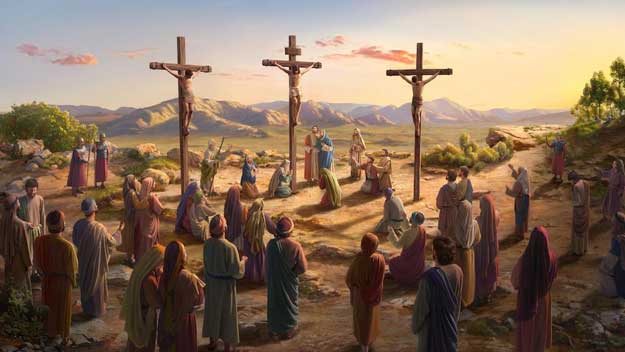
And in the fullness of time, the One God promised, entered the world to fulfill His destiny. He was crucified on a hill, where two guilty men hung only a few feet from their Redeemer. Jesus took the spot meant for Barabbas—the middle cross reserved for a high‑profile criminal. According to the Gospel writer Mark, Barabbas was imprisoned with the rebels who had committed murder in a recent insurrection against Rome. Barabbas walked away, a free man because Jesus took his place.
In the original Greek, the two men crucified beside Jesus were called “robbers,” which denotes bandits, rebels, or insurrectionists, not petty thieves. The Bible doesn’t tell us whether it was greed, desperation, or rebellion that drove them to commit their crimes, but the two were likely part of a culture shaped by uprisings and violence.
We do know they’d been sentenced to death by crucifixion—one of the most painful and feared ordeals ever conceived for capital punishment. Rome reserved crucifixion for insurrectionists and dangerous offenders — men like Barabbas. It was a public, humiliating and excruciating form of execution, designed to be a public deterrent against anyone who might consider defying the power of Rome. After a brutal beating, nails were driven through the wrists and feet, causing blood to pool at the foot of the cross. Even after death, the mutilated bodies were often left on display as a stark warning to other rebels.
In “The Day the Revolution Began: Reconsidering the Meaning of Jesus’s Crucifixion,” by New Testament historian N.T Wright, he describes the scene vividly:
“If you had actually seen a crucifixion or two, as many in the Roman world would have, your sleep itself would have been invaded by nightmares as the memories came flooding back unbidden, memories of humans half alive and half dead, lingering on perhaps for days on end, covered in blood and flies, nibbled by rats, pecked at by crows, with weeping but helpless relatives still keeping watch, and with hostile or mocking crowds adding their insults to the terrible injuries.”
The Romans typically placed crosses in locations where crowds could gather. The sites often had upright beams already in the ground; victims only carried the crossbeam. Golgotha, which means “Place of the Skull,” was located outside of Jerusalem’s walls and close to a heavily travelled road. Golgotha was crowded and busy. The Gospels describe people walking by and hurling insults, soldiers interacting with onlookers, and a handmade sign nailed above Jesus’ head for all to read: THIS IS THE KING OF THE JEWS.
A squad of soldiers stood just steps away, to ensure order if needed, but spectators were allowed access to the victims. Jesus was able to speak directly to His mother and the apostle John. Despite the noise, Jesus heard the voices of the two men dying beside Him.
In anguish, one of the two rebels lashed out at Jesus, “Aren’t you the Messiah? Save yourself and us!” But the other criminal rebuked him. “We are punished justly, for we are getting what our deeds deserve. But this man has done nothing wrong.” Then he said, “Jesus, remember me when you come into your kingdom.”
Jesus answered him, “Truly I tell you, today you will be with me in paradise.”
And in that moment, one of the first people Jesus welcomed into paradise wasn’t a rabbi or a “good” person, but a convicted criminal. Jesus didn’t start His kingdom with saints; it began with sinners.
And with that same grace, He turned unlikely apostles with their flaws and failures, into leaders of the early church.
- Paul was a murderer with blood on his hands.
- Matthew a tax collector, extorted money from his own people and was socially despised.
- Peter the impulsive swordsman, cut off the ear of Malchus, the high priest’s servant.
- Simon was identified as a “Zealot,” a political movement known for assassinations, uprisings, and violent resistance against Rome.
- James and John were nicknamed the “Sons of Thunder” and wanted to call down fire to destroy a Samaritan village.
- The apostles, when approached by an angry mob in the Garden of Gethsemane fled in fear, leaving Jesus alone to face His accusers.
Their stories remind us that God’s kingdom is built with redeemed, but imperfect, broken people. A prisoner, convicted for their flaws and failures, readily identifies with biblical characters who have been transformed by Jesus.
Jesus’ resurrection fractured religious expectations and became the climax of God’s redemptive story. The same power that raised Jesus from the dead is still at work today, bringing hope and victory to those behind bars.
This narrative reflects details found throughout Scripture.